
table of contents
Cloud Infrastructure Management & the IT Operations Engineer
IT Operations Engineer: Your Cloud Infrastructure’s Architect
Hello there, fellow tech enthusiasts! Let’s dive into the dynamic world of cloud infrastructure management and the crucial role played by the IT Operations Engineer. In today’s digital landscape, the cloud isn’t just a trend; it’s the foundation upon which businesses build their futures. As an IT Operations Engineer, you are the architect, the builder, and the guardian of this vital infrastructure. This article will break down the core aspects of cloud infrastructure management and how IT Ops Engineers make it all happen. So, grab your favorite beverage, get comfortable, and prepare to become a cloud expert.
Cloud Infrastructure Provisioning and Deployment
Understanding the Basics: What is Provisioning and Deployment?
Let’s start with the fundamentals: provisioning and deployment. Think of provisioning as preparing the building materials. It’s the process of allocating and configuring the necessary resources – servers, storage, networks – to get your cloud environment ready. Deployment, on the other hand, is the construction phase. It involves taking your applications and services and installing them onto the provisioned resources. Together, these two steps are critical to get your cloud journey off the ground.
The IT Operations Engineer’s Role in Provisioning
The IT Operations Engineer is the architect of this process. They are responsible for selecting the right cloud services, defining the infrastructure requirements, and automating the provisioning process. For instance, using tools like Terraform or Ansible, they can write code to automatically spin up virtual machines, configure network settings, and install necessary software. By automating this process, they ensure speed, consistency, and reduce the chance of human error.
Best Practices for Cloud Deployment
Effective deployment starts with a solid plan. First, it’s essential to have a well-defined infrastructure-as-code approach. This allows for version control, making changes repeatable and easy to track. Next, use continuous integration and continuous deployment (CI/CD) pipelines to automate the software delivery process. This ensures that new code is deployed quickly and reliably. Finally, monitor the deployment closely and have a rollback plan in case something goes wrong.
Cloud Monitoring and Management: The Constant Watch
The Importance of Monitoring in the Cloud
Once you’ve provisioned and deployed your infrastructure, your job isn’t done. It’s like building a house and then constantly checking to ensure the roof doesn’t leak. Cloud monitoring is vital because it lets you keep tabs on performance, identify potential issues, and ensure everything is running smoothly. Without it, you risk performance issues, downtime, and even security breaches.
Key Metrics and Tools for Cloud Monitoring

So, what should you monitor? Several key metrics are critical. These include CPU utilization, memory usage, network traffic, and disk I/O. You’ll also want to monitor application-specific metrics like response times and error rates. As an IT Operations Engineer, you’ll use tools like Prometheus, Grafana, or the cloud provider’s monitoring services (like AWS CloudWatch or Azure Monitor) to collect, visualize, and alert on these metrics.
Proactive Management: Preventing Issues Before They Arise
The best IT Operations Engineers are proactive, not reactive. They set up alerts based on the metrics they monitor. For instance, if CPU usage spikes, an alert can be sent to the operations team to investigate. They also use predictive analytics to anticipate problems before they impact users. This proactive approach minimizes downtime and ensures a smooth user experience.
Cloud Security Management: Fortress in the Sky
Essential Security Considerations for Cloud Environments
Security is a top priority in the cloud. You’re not just protecting a physical server anymore; you’re protecting data that might be spread across multiple geographic locations. Key considerations include identity and access management (IAM), data encryption, network security, and compliance. IAM controls who has access to what resources, encryption keeps your data safe, network security protects your systems from attacks, and compliance ensures you’re adhering to industry standards.
IT Operations Engineer’s Role in Cloud Security
IT Operations Engineers are the front line in cloud security. They implement and manage security tools, configure security policies, and respond to security incidents. They work with IAM systems to ensure that users have only the necessary access. They also configure network security groups and firewalls to protect against unauthorized access. The security of your cloud environment rests heavily on the diligent work of the IT Ops Engineer.
Implementing and Managing Security Tools
Many security tools are available to help protect your cloud infrastructure. These include intrusion detection systems (IDS), vulnerability scanners, and security information and event management (SIEM) systems. IT Operations Engineers are responsible for selecting, deploying, and managing these tools. They must also monitor the logs generated by these tools and respond to any security alerts that arise.
Cloud Cost Optimization: Making Every Penny Count
Strategies for Reducing Cloud Costs
Cloud costs can quickly spiral out of control if not carefully managed. Cost optimization is therefore a crucial part of cloud infrastructure management. Some strategies include choosing the right instance sizes, utilizing reserved instances or savings plans, deleting unused resources, and implementing auto-scaling. The aim is to balance performance and cost-effectiveness.

IT Operations Engineer’s Role in Cost Management
IT Operations Engineers play a vital role in controlling costs. They monitor resource usage and identify areas where costs can be reduced. They work with finance and business teams to understand cost drivers and develop optimization strategies. They also implement tools to monitor and report on cloud spending, ensuring that costs are tracked and aligned with budget constraints.
Tools and Techniques for Optimization
Cloud providers offer several tools to help with cost optimization. For example, AWS offers Cost Explorer, which provides detailed insights into your spending and recommends cost-saving opportunities. Azure has Cost Management + Billing, offering similar functionality. IT Operations Engineers use these tools to identify cost anomalies, find unused resources, and optimize resource allocation. This ensures resources are being used efficiently.
Cloud Automation and Scripting: Efficiency Unleashed
The Power of Automation in the Cloud
Automation is at the heart of modern cloud infrastructure management. It’s how you can manage complex environments at scale and increase efficiency. Automation reduces manual work, speeds up processes, and minimizes the risk of human error. It lets IT Operations Engineers focus on more strategic tasks rather than repetitive manual tasks.
Automation Tools and Technologies
Several tools are available to automate tasks in the cloud. Infrastructure as Code (IaC) tools like Terraform and Ansible allow you to define and manage your infrastructure as code. CI/CD pipelines can automate the deployment of applications. Configuration management tools like Chef and Puppet automate software installation and configuration. The IT Operations Engineer can use these tools and technologies to transform their cloud management capabilities.
Scripting for Cloud Management
Scripting is a skill every IT Operations Engineer should hone. Scripting allows you to automate tasks like creating users, setting up security groups, or backing up data. Languages like Python and Bash are popular for cloud management tasks. By automating these tasks, you can dramatically increase your productivity and ensure consistency across your cloud environment.
Cloud Disaster Recovery and Business Continuity: Always Prepared
Planning for the Worst: Disaster Recovery Strategies
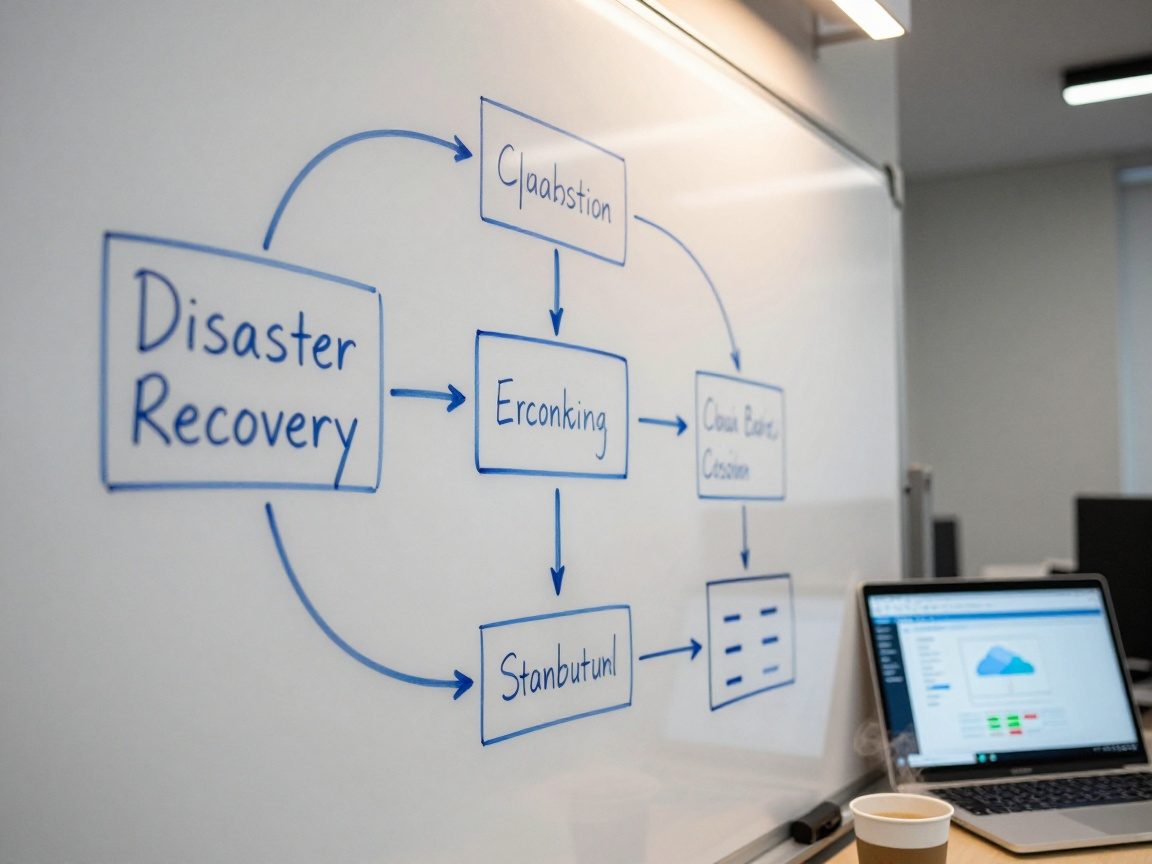
Disasters can strike at any time. That’s why having a solid disaster recovery (DR) plan is crucial. DR involves creating a plan to ensure your business can continue operating if a disaster occurs. This plan should outline how to restore your systems, data, and applications in the event of an outage. The aim is to minimize downtime and data loss.

Implementing Disaster Recovery in the Cloud
The cloud provides several tools and services to implement DR. These include data replication, backup and restore, and failover mechanisms. IT Operations Engineers work to configure these services to meet the organization’s recovery time objective (RTO) and recovery point objective (RPO). This might involve setting up a secondary site or using a multi-region deployment.
Ensuring Business Continuity
Business continuity goes hand-in-hand with disaster recovery. It involves planning to ensure business operations can continue even when there’s a disruption. This might involve having redundant systems, alternate data centers, and a plan to communicate with stakeholders during a crisis. The IT Operations Engineer is part of this team and the execution plan.
Cloud Collaboration and Communication: Staying Connected
Tools and Strategies for Effective Collaboration
Cloud infrastructure management often involves a team of people working together. Effective collaboration is essential for success. Teams utilize various tools like Slack, Microsoft Teams, and project management software like Jira or Asana to communicate and coordinate their efforts. Keeping everyone on the same page is vital to smooth operation.
Communication within the Cloud Team
Clear and concise communication is critical. The IT Operations Engineer should establish clear communication channels, schedule regular meetings, and use a central location for documentation. This will make it much easier to share knowledge, coordinate tasks, and resolve issues quickly. Communication keeps things running smoothly.
Importance of Documentation
Documentation is often overlooked, but it is a vital part of any cloud infrastructure strategy. Documenting your infrastructure, procedures, and configurations ensures everyone understands how things work. Well-written documentation helps onboard new team members, troubleshoot problems, and ensure consistency across the environment. A well-documented cloud infrastructure is easier to manage and maintain.
The Future of IT Operations Engineering in the Cloud
The future of IT Operations Engineering in the cloud is bright. With the continued growth of cloud adoption, the demand for skilled IT Operations Engineers will only increase. Emerging trends like serverless computing, edge computing, and the increasing importance of artificial intelligence (AI) and machine learning (ML) will also shape the future of the role. IT Operations Engineers who stay current with these trends and continue to develop their skills will be well-positioned for success.
Conclusion: Embracing the Cloud Revolution
As we wrap up this journey through cloud infrastructure management and the role of the IT Operations Engineer, it’s clear that the cloud is transforming how businesses operate. For IT Operations Engineers, this means embracing change, acquiring new skills, and adapting to new technologies. You are the foundation for a successful cloud transformation. By focusing on provisioning, monitoring, security, cost optimization, automation, disaster recovery, and collaboration, you can build a robust, efficient, and secure cloud infrastructure. Embrace the challenge, stay curious, and be a part of the cloud revolution!
FAQs
What are the key skills for an IT Operations Engineer in the cloud?
The key skills include expertise in cloud platforms (AWS, Azure, Google Cloud), infrastructure-as-code, automation, security best practices, monitoring tools, scripting, and a solid understanding of networking and operating systems. Adaptability and continuous learning are also crucial.
How can I get started in cloud infrastructure management?
Start by learning the basics of cloud computing through online courses, certifications (AWS Certified Solutions Architect, Azure Solutions Architect Expert), and hands-on experience. Get familiar with popular cloud platforms, learn scripting, and explore automation tools. Build a home lab or participate in open-source projects to gain practical experience.
What are the biggest challenges in cloud infrastructure management?
The biggest challenges include managing costs, ensuring security and compliance, dealing with complex configurations, and responding to incidents quickly. Keeping up with the rapid pace of technology changes and managing hybrid and multi-cloud environments can also be challenging.
How important is automation in cloud infrastructure management?
Automation is absolutely crucial. It streamlines tasks, reduces manual errors, increases efficiency, and allows IT Operations Engineers to manage complex environments at scale. Infrastructure-as-code, CI/CD pipelines, and configuration management tools are essential for automating cloud operations.
What are the essential tools for cloud monitoring and management?
Essential tools include monitoring platforms like Prometheus and Grafana, cloud-specific monitoring services (AWS CloudWatch, Azure Monitor, Google Cloud Monitoring), and security tools like intrusion detection systems (IDS) and SIEM. Various other tools like Terraform, Ansible, Chef, Puppet, and more are also important for managing resources.